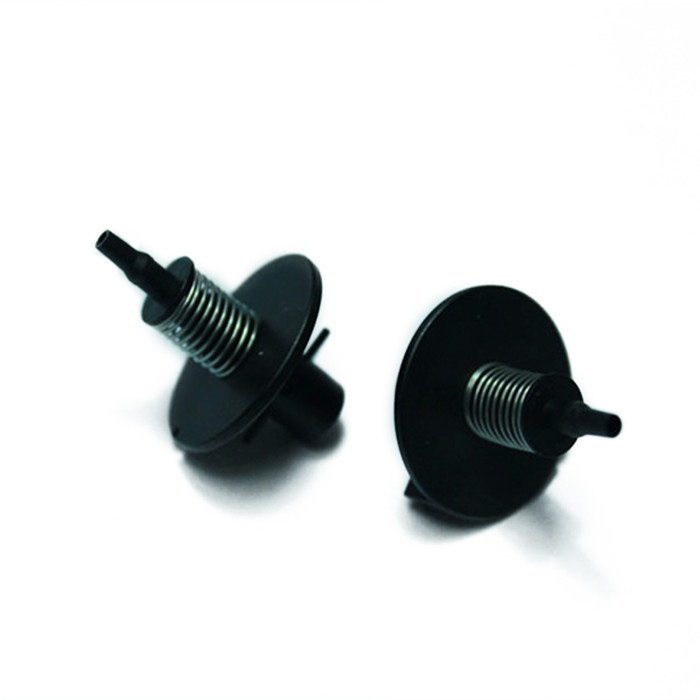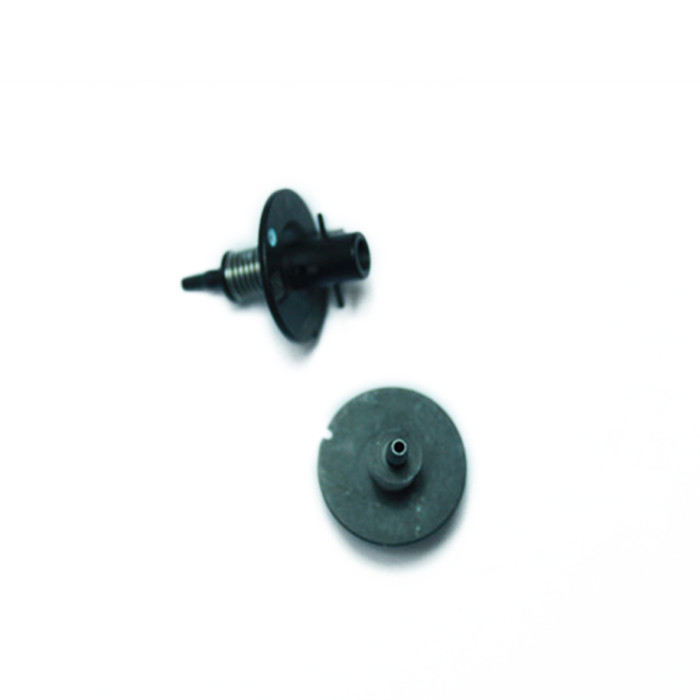
Multi-Pin Connector Customized Nozzle Adaptation Solution for Smt Industry

Multi-pin connector customized nozzle: Multi-Pin Solutions for High-Precision Automated Production
Customized nozzles have become critical for improving placement efficiency and yield, particularly for connectors with 6-pin, 8-pin, 9-pin, and 10-pin configurations. This article explores the design differences among multi-pin connector nozzles and key considerations for customization.
1. Differences in Multi-Pin Connector Nozzle Design
6-Pin Connector Nozzles
6-pin connectors are commonly found in consumer electronics and communication modules, featuring relatively wider pin spacing (e.g., 1.27mm or 2.0mm). Nozzle design emphasizes lightweight construction and versatility, often utilizing single or multi-hole suction solutions. The nozzle cavity must avoid interference with pins while ensuring full contact with the connector housing.
8-Pin Connector Nozzles
8-pin connectors (such as USB Type-C or RJ45) demand higher precision, requiring nozzles to accommodate tighter pin layouts (e.g., 0.5mm spacing). Custom designs must incorporate anti-static (ESD) protection and optimize vacuum suction distribution to prevent misalignment caused by uneven force.
9-Pin Connector Nozzles
9-pin connectors (e.g., certain industrial interfaces) often feature asymmetrical layouts, necessitating customized grooves to match housing shapes. Since the pin count is odd, asymmetric airflow channels are required to balance suction and prevent tilting.
10-Pin Connector Nozzles
10-pin (and higher) connectors (e.g., board-to-board types) require more complex nozzle designs, often employing multi-chamber structures or zoned suction technology. High-density pins call for wear-resistant materials (e.g., ceramic or tungsten steel), and nozzle tips may require anti-stick coatings to minimize solder paste residue.
2. Four Key Considerations for Custom Nozzles
Precise Connector Measurement
Critical parameters include pin pitch, housing height, and weight, with tolerances within ±0.01mm.
Provide 3D models or physical samples to avoid design mismatches.
Material Selection and Process Compatibility
Ceramic nozzles (wear-resistant, anti-static) suit high-volume production, while coated stainless steel offers cost efficiency.
For irregularly shaped connectors, CNC machining or laser cutting ensures precise contour matching.
Vacuum System Compatibility Testing
Multi-pin nozzles must align with the pick-and-place machine’s vacuum pressure to prevent drops.
Airflow simulation is recommended to optimize internal channel design.
Error-Proofing and Maintenance
Guide slots or alignment markers reduce operator errors.
Modular designs enable quick replacement of worn parts, minimizing downtime.
3. Industry Case Study
An automotive electronics manufacturer achieved a yield increase from 92% to 99.5% and a throughput boost of 200 units/hour after adopting a customized 10-pin nozzle with zoned suction and ceramic coating, resolving pin adhesion issues.
4. Conclusion
In a word, customized nozzles have become the key to improving the efficiency and yield of surface mount technology (SMT). This is the content Yangling Electronics mainly talking about. If you are interested in our products, please contact Nancy to make an offer for you. Thank you.
Customized LED Light Nozzle for SMT Electronics Manufacturing
Related Article