
What is SMT?(五) -- Reflow soldering
author: Hellen
2022-09-14
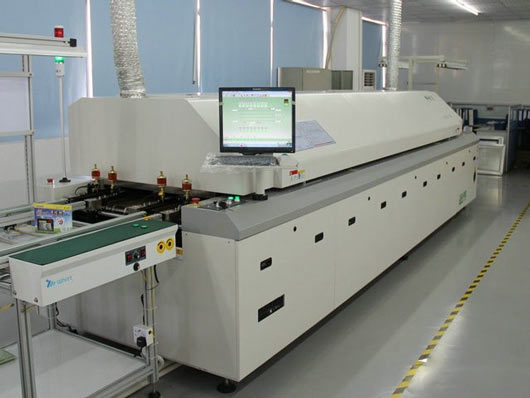
I. Overview
Reflow soldering is also called "reflow soldering" or "reflow welder" or "reflow oven" (Reflow Oven), it is through the provision of a heating environment, so that the solder paste by heat melting so that surface mount components and PCB pads through the solder paste alloy reliably combined together with the equipment. According to the development of technology is divided into: gas phase reflow soldering, infrared reflow soldering, far infrared reflow soldering, infrared heating wind reflow soldering and full hot air reflow soldering. In addition, according to the special needs of welding, containing nitrogen-filled reflow oven. Most of the more popular and practical are far-infrared reflow soldering, infrared heating wind reflow soldering and full hot air reflow soldering.
Ⅱ, Infrared reflow soldering
(1)The first generation-hot plate type reflow soldering furnace
(2) The second generation - infrared reflow furnace
80% of the heat energy is in the form of electromagnetic waves - infrared emission to the outside. Its wavelength in the upper limit of visible light 0.7 ~ 0.8um to 1mm between 0.72 ~ 1.5um for near infrared; 1.5 ~ 5.6um for mid-infrared; 5.6 ~ 1000um for far infrared, microwave is above the far infrared.
The mechanism of warming:When the vibration frequency of infrared wavelength is the same as the vibration frequency between molecules of the object being radiated, resonance will occur, and the intense vibration of molecules means the warming of the object. The wavelength is 1~8um.
The fourth zone has the highest temperature setting, which causes a rapid rise in the temperature of the soldering zone and increases the weeping wetting force. Advantages:It makes flux as well as organic acids and halides hydrogenate rapidly thus improving the wetting power; the radiation wavelength of infrared heating is similar to the absorption wavelength, so the substrate heats up fast and the temperature difference is small; the temperature profile is easy to control and flexible; the infrared heater is highly efficient and low cost.
Disadvantages:Poor penetration, there is a shadow effect - uneven heat.
Countermeasures:Hot air circulation is added in the reflow soldering.
(3) The third generation - infrared hot air reflow soldering.
Convection heat transfer depends on the speed of the wind, but excessive wind speed will cause the displacement of components and contribute to the oxidation of solder joints, wind speed control at 1.0 ~ 1.8m / s. Hot air is generated in two forms: axial fan generated (easy to form laminar flow, its movement caused by the temperature zone boundaries are unclear) and tangential fan (fan mounted on the outside of the heater, resulting in panel vortex and make each temperature zone can be accurately controlled).
Basic structure and adjustment of temperature profile:
1. heater: tube heater, plate heater aluminum or stainless steel plate;
2. Conveyor system: heat-resistant tetrafluoroethylene glass fiber cloth. 3;
3. smooth running, good thermal conductivity, but can not be connected to the line, for small hot plate type stainless steel mesh, for double-sided PCB, also can not be connected to the line; chain guide, can realize the line production.
4. forced convection system:temperature control system.
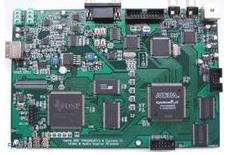
Ⅲ. Process flow
1. single panel:
(1) Print solder paste at the same time of mounting and plug-in pads;
(2) Placement of SMC/SMD;
(3) Insert TMC/TMD;
(4) Reflow soldering.
2. Two-panel:
(1) Solder paste - reflow soldering process to complete the soldering of double-sided chip components;
(2) Then apply solder paste to the through-hole component pads on side B;
(3) Reverse the PCB and insert the through-hole component;
(4) Third reflow soldering.
IV. Notes
1、Compatibility with SMB, including the wettability of the pad and the heat resistance of SMB;
2、The quality of the solder joint and the tensile strength of the solder joint;
3、Soldering working curve:
Preheating zone: temperature rise rate of 1.3~1.5 degree/s, the temperature rises to 150 degree within 90~100s.
Holding zone: temperature of 150 ~ 180 degrees, 40 ~ 60s.
Re-flow zone: from 180 to the highest temperature of 250 degrees need 10 ~ 15s, back to the holding area of about 30s fast cooling
Lead-free soldering temperature (tin-silver-copper) 217 degrees.
4、Flip Chip reflow soldering technology F.C.
V. Weather reflow soldering
Also known as Vapor Phase Soldering (Vapor Phase Soldering, VPS), the United States was initially used for thick film integrated circuits soldering, with the advantages of fast heating and temperature uniformity and constancy, but the heat transfer medium FC-70 expensive, and the need for FC-113, and ozone depleting substances. Advantages:
1, Vapor phase latent heat release is not sensitive to the physical structure and geometry of SMA, so that the components are uniformly heated to the soldering temperature;
2. The welding temperature is maintained at a certain level without the use of temperature control means to meet the needs of different temperature welding;
3、The vapor phase field of VPS is saturated vapor, with low oxygen content;
4, high thermal conversion rate.
Ⅵ, laser reflow soldering
1, the principle and characteristics: the use of laser beam directly irradiated welding parts.
2, the solder joint absorbs light energy into heat, heating the welded part, so that the solder melts.
3, type: solid YAG (ethyl aluminum garnet) laser.
Reflow soldering is also called "reflow soldering" or "reflow welder" or "reflow oven" (Reflow Oven), it is through the provision of a heating environment, so that the solder paste by heat melting so that surface mount components and PCB pads through the solder paste alloy reliably combined together with the equipment. According to the development of technology is divided into: gas phase reflow soldering, infrared reflow soldering, far infrared reflow soldering, infrared heating wind reflow soldering and full hot air reflow soldering. In addition, according to the special needs of welding, containing nitrogen-filled reflow oven. Most of the more popular and practical are far-infrared reflow soldering, infrared heating wind reflow soldering and full hot air reflow soldering.
Ⅱ, Infrared reflow soldering
(1)The first generation-hot plate type reflow soldering furnace
(2) The second generation - infrared reflow furnace
80% of the heat energy is in the form of electromagnetic waves - infrared emission to the outside. Its wavelength in the upper limit of visible light 0.7 ~ 0.8um to 1mm between 0.72 ~ 1.5um for near infrared; 1.5 ~ 5.6um for mid-infrared; 5.6 ~ 1000um for far infrared, microwave is above the far infrared.
The mechanism of warming:When the vibration frequency of infrared wavelength is the same as the vibration frequency between molecules of the object being radiated, resonance will occur, and the intense vibration of molecules means the warming of the object. The wavelength is 1~8um.
The fourth zone has the highest temperature setting, which causes a rapid rise in the temperature of the soldering zone and increases the weeping wetting force. Advantages:It makes flux as well as organic acids and halides hydrogenate rapidly thus improving the wetting power; the radiation wavelength of infrared heating is similar to the absorption wavelength, so the substrate heats up fast and the temperature difference is small; the temperature profile is easy to control and flexible; the infrared heater is highly efficient and low cost.
Disadvantages:Poor penetration, there is a shadow effect - uneven heat.
Countermeasures:Hot air circulation is added in the reflow soldering.
(3) The third generation - infrared hot air reflow soldering.
Convection heat transfer depends on the speed of the wind, but excessive wind speed will cause the displacement of components and contribute to the oxidation of solder joints, wind speed control at 1.0 ~ 1.8m / s. Hot air is generated in two forms: axial fan generated (easy to form laminar flow, its movement caused by the temperature zone boundaries are unclear) and tangential fan (fan mounted on the outside of the heater, resulting in panel vortex and make each temperature zone can be accurately controlled).
Basic structure and adjustment of temperature profile:
1. heater: tube heater, plate heater aluminum or stainless steel plate;
2. Conveyor system: heat-resistant tetrafluoroethylene glass fiber cloth. 3;
3. smooth running, good thermal conductivity, but can not be connected to the line, for small hot plate type stainless steel mesh, for double-sided PCB, also can not be connected to the line; chain guide, can realize the line production.
4. forced convection system:temperature control system.
Ⅲ. Process flow
1. single panel:
(1) Print solder paste at the same time of mounting and plug-in pads;
(2) Placement of SMC/SMD;
(3) Insert TMC/TMD;
(4) Reflow soldering.
2. Two-panel:
(1) Solder paste - reflow soldering process to complete the soldering of double-sided chip components;
(2) Then apply solder paste to the through-hole component pads on side B;
(3) Reverse the PCB and insert the through-hole component;
(4) Third reflow soldering.
IV. Notes
1、Compatibility with SMB, including the wettability of the pad and the heat resistance of SMB;
2、The quality of the solder joint and the tensile strength of the solder joint;
3、Soldering working curve:
Preheating zone: temperature rise rate of 1.3~1.5 degree/s, the temperature rises to 150 degree within 90~100s.
Holding zone: temperature of 150 ~ 180 degrees, 40 ~ 60s.
Re-flow zone: from 180 to the highest temperature of 250 degrees need 10 ~ 15s, back to the holding area of about 30s fast cooling
Lead-free soldering temperature (tin-silver-copper) 217 degrees.
4、Flip Chip reflow soldering technology F.C.
V. Weather reflow soldering
Also known as Vapor Phase Soldering (Vapor Phase Soldering, VPS), the United States was initially used for thick film integrated circuits soldering, with the advantages of fast heating and temperature uniformity and constancy, but the heat transfer medium FC-70 expensive, and the need for FC-113, and ozone depleting substances. Advantages:
1, Vapor phase latent heat release is not sensitive to the physical structure and geometry of SMA, so that the components are uniformly heated to the soldering temperature;
2. The welding temperature is maintained at a certain level without the use of temperature control means to meet the needs of different temperature welding;
3、The vapor phase field of VPS is saturated vapor, with low oxygen content;
4, high thermal conversion rate.
Ⅵ, laser reflow soldering
1, the principle and characteristics: the use of laser beam directly irradiated welding parts.
2, the solder joint absorbs light energy into heat, heating the welded part, so that the solder melts.
3, type: solid YAG (ethyl aluminum garnet) laser.
What is SMT?(六) -- Reflow soldering common knowledge Ⅰ
What is SMT?(四) -- Process composition
Related Article

Krytox XHT-BDZ 75g is a premium PFPE-based extreme high temperature grease designed for industrial applications requiring excellent thermal stability, chemical resistance and long-lasting lubrication performance.
Low Volatility Lubricant Krytox XHT-BDZ 75g Extreme High Temperature PFPE Grease Lubricant for Industrial Applications
Kluber Klubersynth UH1 14-222 25KG is a premium NSF H1 food grade synthetic grease designed for food processing, pharmaceutical and packaging equipment. Excellent wear protection, water resistance and long lubrication intervals for bearings and machine components.
NSF H1 Grease Kluber Klubersynth UH1 14-222 25KG Food Grade Synthetic Grease for Food Processing Equipment

Molykote Longterm 2 Plus 1KG is a high-performance long-life bearing grease designed for heavy-duty industrial applications. Excellent wear protection, high load resistance and extended lubrication intervals. Available as a cost-effective alternative from professional lubricant manufacturers.
Molykote Longterm 2 Plus Grease 1KG Extreme Pressure Bearing Grease Industrial Lubricant for Bearings and Machinery

Molykote HP-870 Grease 1KG is a high performance industrial lubricant designed for high temperature bearings and precision equipment. Premium alternative solution available.
High Temperature Bearing Grease Molykote HP-870 1KG PFPE Grease Long Life Lubrication Solution for Bearings Motors and Industrial Equipment