
Do You Know Types and Functions Solder Paste Mixer Machines in SMT Production Line?
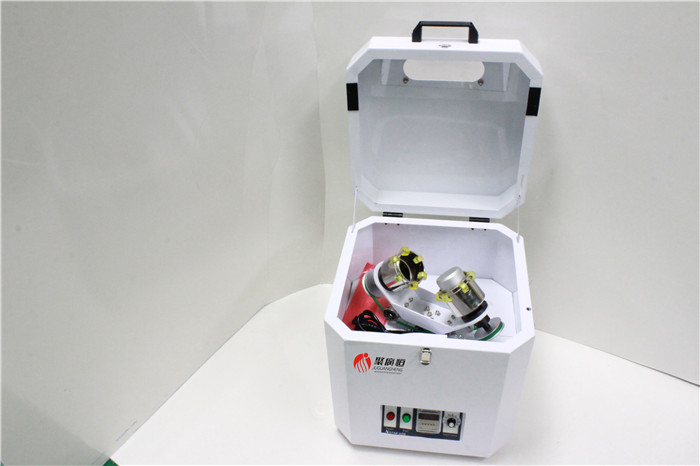
Functions of Solder Paste Mixer Machines
Homogenization: The primary function of a solder paste mixer machine is to homogenize the solder paste. This involves evenly distributing the solder particles and flux throughout the paste to eliminate any separation or settling that may have occurred during storage or transportation.
Deaeration: Mixing the solder paste can introduce air bubbles, which can lead to defects during the PCB assembly process. Solder paste mixer machines often include deaeration features that help to remove these air bubbles, ensuring a smooth and uniform paste.
Consistency Maintenance: Solder paste consistency is critical for reliable stencil printing and component placement. Mixer machines ensure that the paste has the correct viscosity and texture, which is vital for precise application and solder joints.
Temperature Control: Some advanced solder paste mixers come with temperature control capabilities to maintain the paste at an optimal temperature. This is important because temperature variations can affect the paste’s viscosity and performance.
Efficiency and Time-Saving: Automated solder paste mixers can significantly reduce the time and effort required to prepare the paste compared to manual mixing. This improves overall production efficiency and helps maintain consistent quality.
Types of Solder Paste Mixer Machines
Solder paste mixer machines come in various designs, each tailored to specific production needs and scales. The main categories include:
Dual-Axis Mixers: These machines utilize dual-axis rotation to mix the solder paste. The jar containing the paste is rotated around two perpendicular axes, ensuring thorough mixing and homogenization. Dual-axis mixers are highly effective for achieving a consistent paste quality and are commonly used in medium to large-scale production environments.
Planetary Mixers: Planetary mixers mimic the motion of planets orbiting the sun, providing a comprehensive mixing action. The paste container moves in a planetary motion, ensuring that all parts of the paste are mixed evenly. These mixers are particularly effective for high-viscosity pastes and are favored in settings where optimal paste quality is critical.
Vacuum Mixers: Vacuum mixers are designed to mix and deaerate solder paste simultaneously. By creating a vacuum environment during the mixing process, these machines effectively remove air bubbles, resulting in a paste with superior consistency and fewer defects. Vacuum mixers are suitable for high-precision applications where the exist of air bubbles can be detrimental.
Centrifugal Mixers: Centrifugal mixers use centrifugal forc e to mix the solder paste. The paste container is spun at high speeds, causing the contents to mix thoroughly. These mixers are efficient and fast, making them suitable for high-volume production lines where speed and consistency are paramount.
Spatula Mixers: Spatula mixers use mechanical spatulas to stir the solder paste within the container. While less common, these mixers provide a gentle mixing action that can be beneficial for delicate solder pastes that may be sensitive to more aggressive mixing methods.
I believe that through Yangling Electronics to describe the types and functions of solder paste mixer, everybody has a certain understanding of solder paste mixer, if you are interested in our products, please contact Nancy.
Next time, we will talk about the differences and Advanced Features Between Solder Paste Mixer Machines.
Some information comes from the internet, if there is infringement, please contact us at 13580828702.
Do You Know Differences and Advanced Features Between Solder Paste Mixer Machines for SMT Machinery Industry
Do you know how to reduce the problem of poor solder paste printing in smt pick and place machine processing?
Related Article


